From concert at Merkin Hall, February 9, 2014.
Inga Kashakashvili, piano. Jay Campbell, cello.
From concert at Merkin Hall, February 9, 2014.
Inga Kashakashvili, piano. Jay Campbell, cello.
Inga Kashakashvili, piano
Jay Campbell, cello
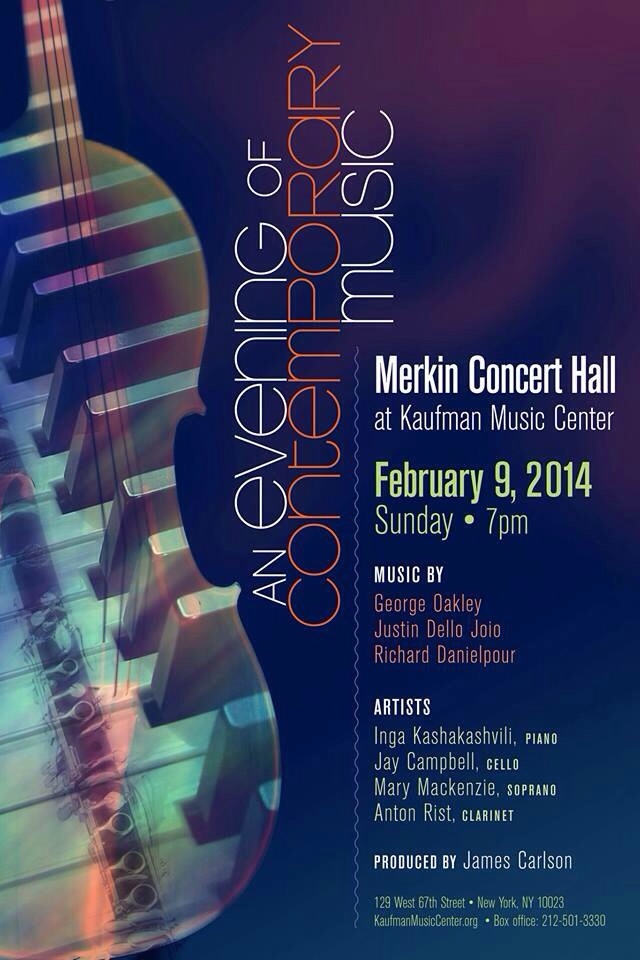
Please join us at our concert:
Merkin Hall
Sunday, Feb 9 at 7PM
129 W 67th street
New York City.
The video above was taken with my iPhone 5s. Rehearsal at our place, January 31, 2014.

Pianist Inga Kashakashvili trying out the piano in the Green Room, Merkin Hall.
Music: Preludes by Richard Danielpour – from The Enchanted Garden, Book II
Please join us at our concert:
Merkin Hall
Sunday, Feb 9 at 7PM
129 W 67th street
New York City.
Of course the term makes me cringe. Does it refer to the music from the time of Mozart to the time of Beethoven? Does it include Wagner? Ravel? Debussy? Cage? Shostakovich? Bach? Monterverdi? Gesualdo? Dufay? Ockeghem? Machaut? And there is contemporary classical music, which seems like a contradiction in terms — how can it be classical if it is contemporary? I thought a composer had to be dead to be in the running for “classical”. In real life, I think the term is shorthand for music which is composed and which is or might be played in a concert hall
The important issue is not the definitional boundaries of the term, but rather “what is the future of the genre”. Here is a depressing view of that future: I learned about Vanhoenacker’s article from a posted to Facebook.
There is a mostly thoughtful rebuttal by Andy Doe. However, there is a problem — we who love “classical” music would like it to thrive, and one can’t help but think about new models of connecting musicians and audience. , which describes itself as
halfway between a chamber music concert and a house party.
It’s equal parts musical and social. It’s a way to enjoy yourself and enrich yourself.
Groupmuse seems to have a good idea. Their philosophy is described in more detail at their blog, blog.groupmuse.com Here is an extended quote
Sam and I often speak about how one of our goals is to “change the social role of classical music.” By this we refer to changing the perception of classical as outmoded, boring, elitist, expensive, etc. But we also refer to reforming it’s socioeconomic role.
The music performed at groupmuses is small scale: small spaces, few listeners, fewer performers. Where else in the music industry but Groupmuse are such performances economically feasible? The pop and dance music industries are dominated by huge stadium tours and festivals. Few small venues can afford to operate and few acts can afford to tour them—and most of these venues and tours are hardly profitable. The classical music industry is increasingly dependent on donations and endowments, so small organizations putting on Groupmuse-size concerts have difficulty staying in business.
It’s naturally difficult to profit off a small concert—fewer audience members mean fewer ticket sales, after all. Then there are venue and marketing costs to consider. At the end of the day, it’s rare for the musicians and the venue operator to walk away with a wad of cash worth the time they spent on the concert.
A groupmuse, when you look at it through the eyes of a heartless, cold-blooded money-shark, is the same small concert, minus the costs of marketing, maintaining a venue, and paying the venue operator. More $$ for the performers means more viable small concerts. And that’s reforming the socioeconomic role of classical music.
– Ezra
Now that is something to think about. Let’s do think. And then let’s act — if not with this model, another.
PS. A great write-up on Groupmuse at DigBoston
Composers combine notes. That’s all.
— Igor Stravinsky


Compositium 1
Composite of two iphone photographs … Piece by Shostakovich and interior of Kawai baby grand piano.
zipTimer: an iPod/iPhone app for pacing piano practice, cooking, workouts, you name it.

Why I like New York #1: I can walk from my apartment to the shop where I get my cello repaired. Just nine minutes. Mike, the repairman, and I shot the breeze for a while. He came to New York City from New Mexico many years ago to play jazz bass. Still does (Dixieland) at Arthur’s Tavern at 57 Grove Street.
My cello will be OK. is suffering from low humidity – part of the face came unglued from the sides — apparently a common ailment this time of year.
zipTimer: an iPod/iPhone app for pacing piano practice, cooking, workouts, you name it.
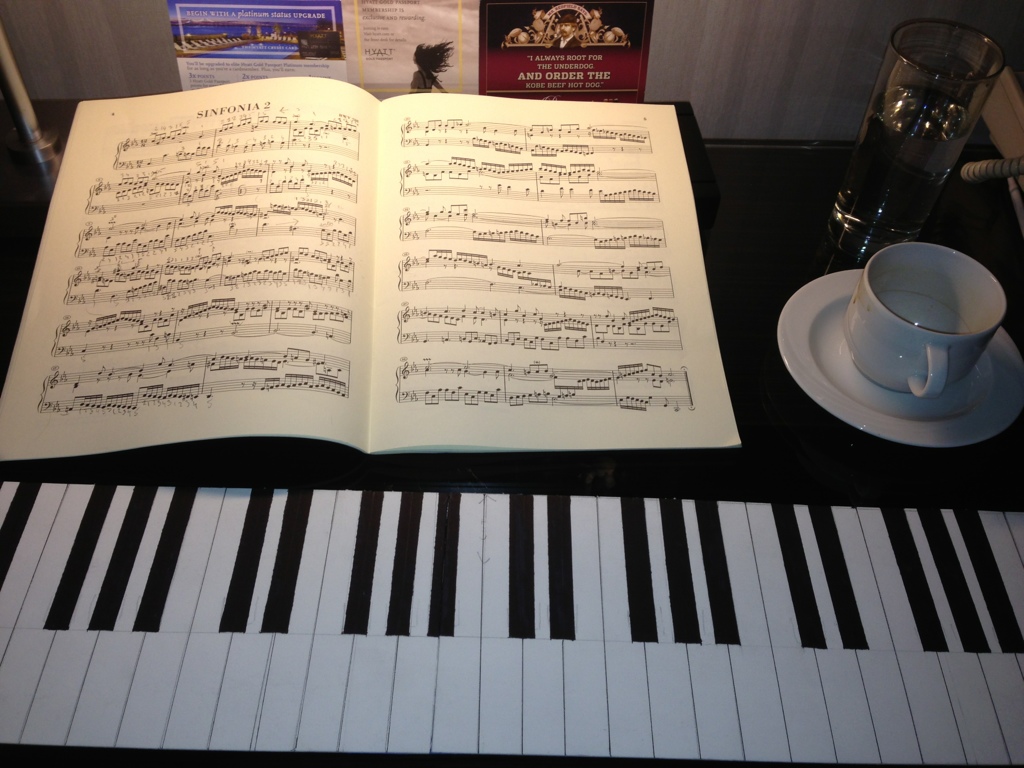
Great for practicing while on the road – folds once to fit in my backpack or small suitcase.
Location: hotel room in San Diego.
zipTimer: an iPod/iPhone app for pacing piano practice, cooking, workouts, you name it.

 Circle and Square