
The Emperor's Tree
Tree trunk, emperor’s garden in Forbidden City, Beijing.
October 2011
zipTimer: an iPod/iPhone app for pacing piano practice, cooking, workouts, you name it.
The Emperor's Tree
Tree trunk, emperor’s garden in Forbidden City, Beijing.
October 2011
zipTimer: an iPod/iPhone app for pacing piano practice, cooking, workouts, you name it.
Thanks Steve, for that bicycle. I use it a lot. So does my son, my wife, my whole family. Each one in a different way, their own way. We’ve all traveled to new places on our bicycles. By the way, besides working really well, they are beautiful: sleek, elegant.
You inspire us.

Your time is limited, so don’t waste it living someone else’s life. Don’t be trapped by dogma — which is living with the results of other people’s thinking. Don’t let the noise of others’ opinions drown out your own inner voice. And most important, have the courage to follow your heart and intuition. They somehow already know what you truly want to become. Everything else is secondary. — Stanford Commencement Speech, 2005

This piece is really intended for cello and piano. But the Sibelius robot’s cello sound is unbearable, hence the instrumentation change. I’ll try the cello robot once I get some better sounds installed.
My current homework is to write a scherzo (ABA or ABA’), with this as the introduction.
zipTimer: an app for pacing your daily music practice!

(c) copyright Shireen Nesaht
The striking image on the left, from Women of Allah (1999), is representative of Shirin Neshat’s powerful visual imagination. For more photographs, see John LeKay’s interview in Heyoka Magazine.
A September 25, 2011 article about Neshat in the Iran Chamber Society gives both a biographical sketch and an account of recent work and recognition:
Shirin Neshat was born 1957, Qazvin, Iran. Although she lives and works in New York, the United States, her artwork explores issues of her native society, Iran, especially the position of women. She uses the specifics of her background culture to create works that communicate universal ideas about loss, meaning, and memory. …
Extract from wikipedia article: In 2001-02, Neshat collaborated with singer Sussan Deyhim and created Logic of the Birds, which was produced by curator and art historian RoseLee Goldberg. The full length multimedia production premiered at the Lincoln Center Summer Festival in 2002 and toured to the Walker Art Institute in Minneapolis and to Artangel in London.
More links:
zipTimer: an iPod/iPhone app for pacing piano practice, workouts, you name it.
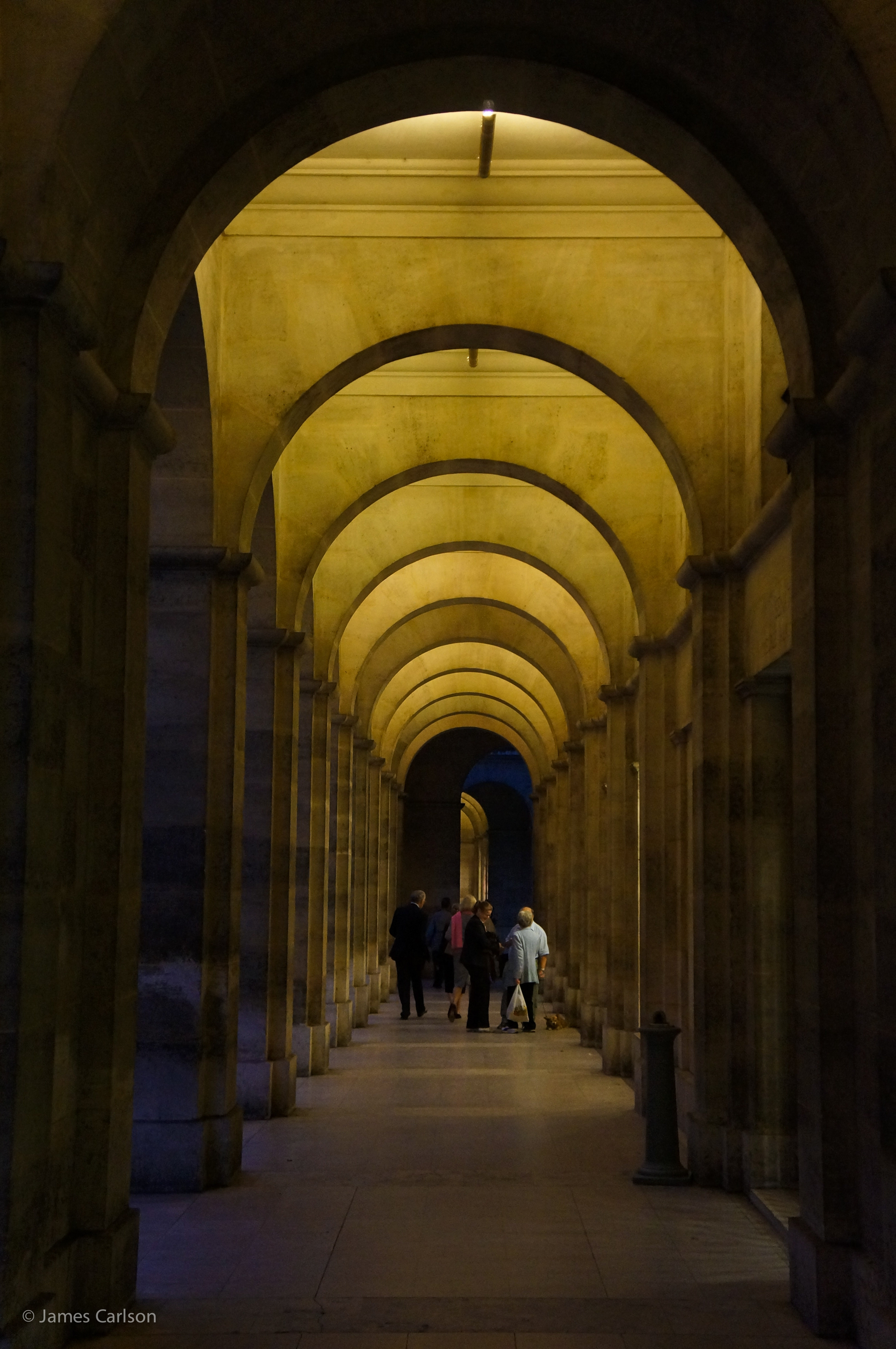
Paris
Many of the recent photos show here have been taken with a Sony NEX-5N and a 15-55 mm zoom lens. A few were taken with my iphone, e.g., Rothko on the Hudson. I hesitated before buying this camera. The reviews I had read criticized it for Byzantine menus. I was worried about having an LCD-only viewfinder. In fact, the menus have not bothered me, nor has the touch interface, of which I was also skeptical. The LCD viewfinder works in most situations. However, on can also buy a screw-on optical viewfinder. I used it at a party under low light conditions and was delighted by its performance.
About low light performance. I find it to be excellent. I’ve used primarily the default “intelligent-auto” shooting mode. At the party in question I got some beautiful photos for which I would ordinarily have used my canon EOS 40-D on aperture priority, a large aperture, and large ISO. I do use the aperture priority setting on the NEX 5-N on occasion, and so far am happy with it. Even at f 5.6 I can get a shallow-enough depth of field in a a close shot to adequately blur the background.
A great feature of the NEX-5N is the almost imperceptible shutter lag. Large lag is a show-stopper for me.
On the whole, I love this camera. I needed something small for travel which was still capable of taking good photos. The camera is light enough to comfortably carry on daily walks in the city. As a result, I get shots that I would ordinarily have to forego because I am too lazy or tired to lug the EOS 40-D with me. I’ve found dusk to be a wonderful time to shoot, as any photography book will tell you. Also a great time to be outside!

I’ll post an update soon. My composition teacher made some suggestions which I think will much improve this piece.
The process: I started out with a written-out six measure improvisation for cello. That melody constitutes the first six measures of the bassoon part. Then, on a long plane ride a few weeks later, I wrote counterpoint to the melody to get the oboe started. As best I recall, I would extend the oboe line for a while, then extend the bassoon line. At some point I decided to have fun with the little bit of imitation in measures 10 and 11.
Performance: the Sibelius robot
zipTimer: an app for pacing your daily music practice.

Construction


 Circle and Square