
17 Murray
17 Murray
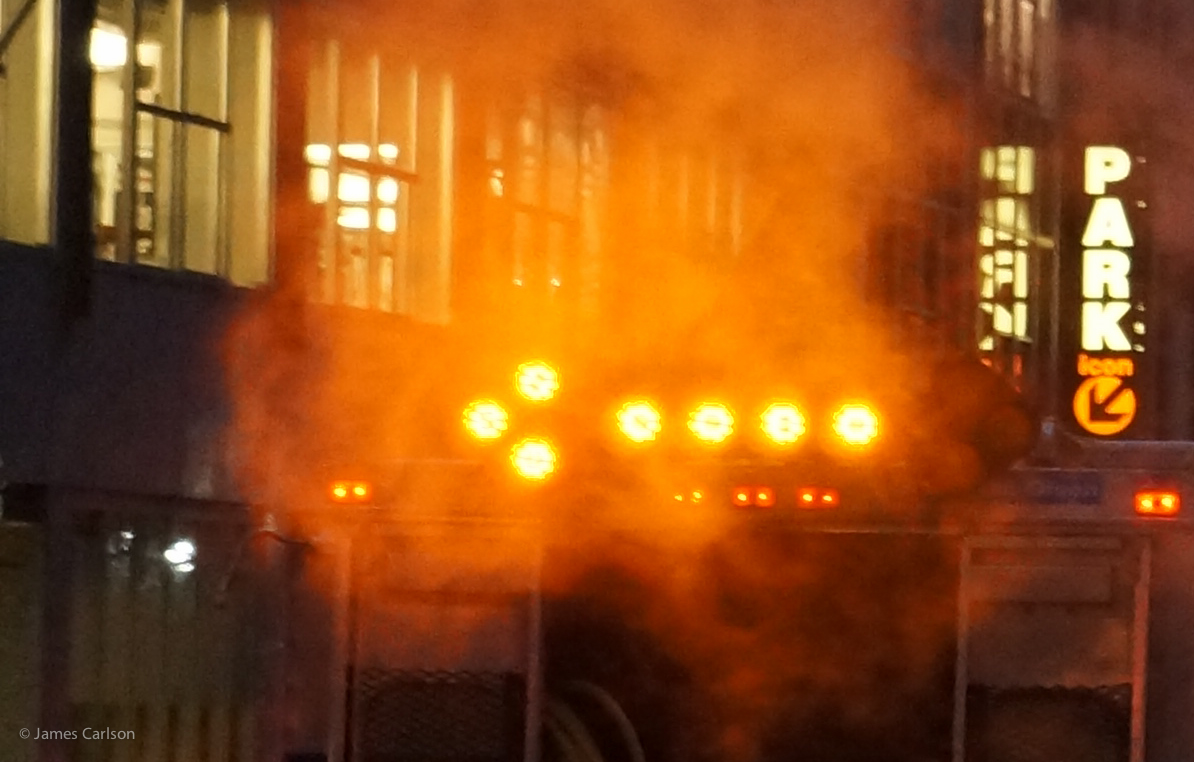
Left turn
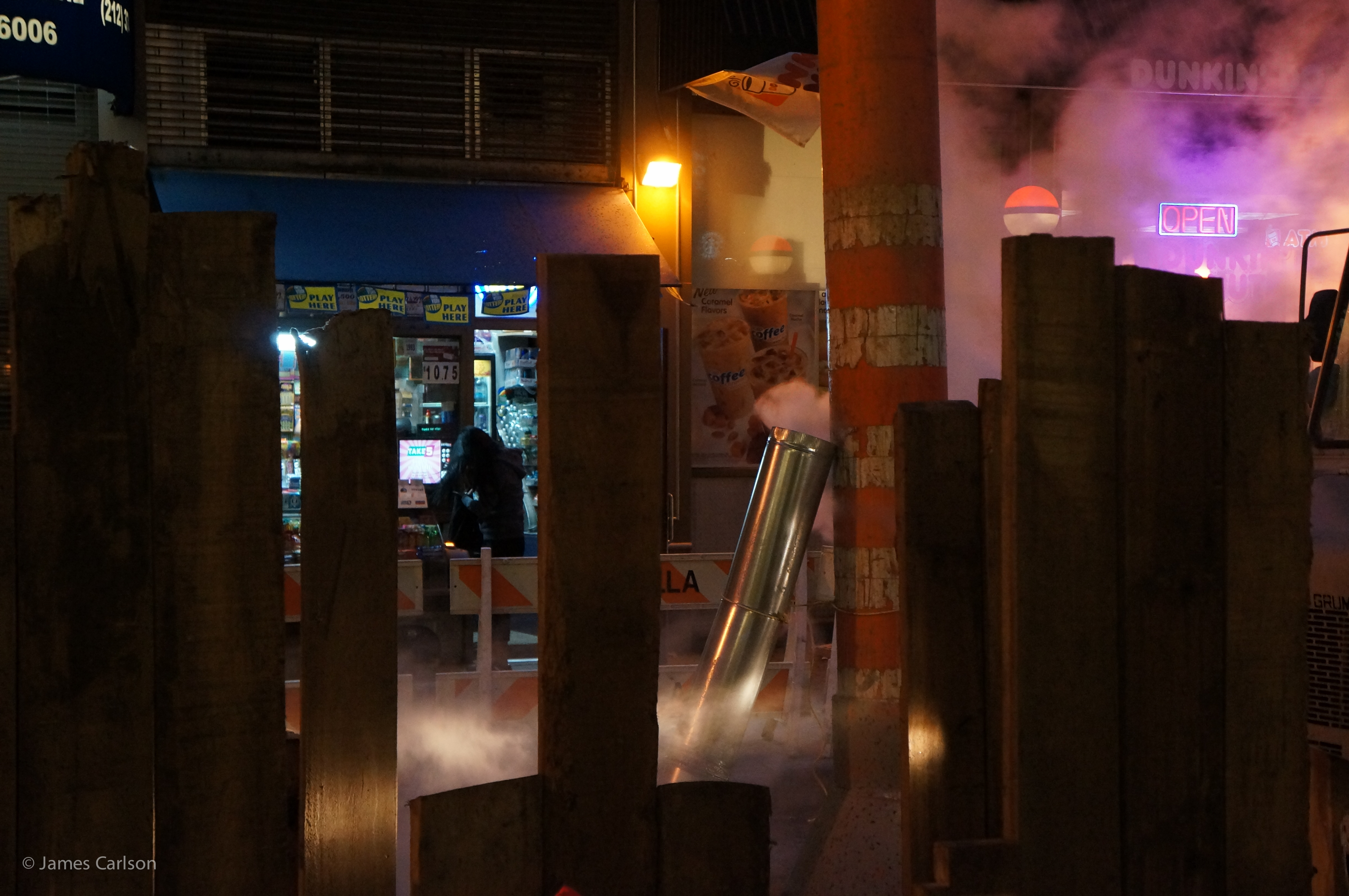
Repair on Murray Street
The Joy of Math – Charles Krauthammer, Time Magazine, April 18, 1988
A quote from the article:
What higher calling can there be than searching for useless and beautiful truths? Number theory is as beautiful and no more useless than mastery of the balance beam or the well-thrown forward pass. And our culture expends enormous sums on those exercises without asking what higher end they serve.
I would rephrase this quote as simply What higher calling can there be than the search for beauty or truth. In any case, discussions about the role of mathematics – or almost anything, for that matter – avoid a serious philosophical problem. If one does X in order to achieve Y, why does one seek Y? Is it because Y is intrinsically worthwhile, or is it because Y is justified by Z? And so on. There are only two possibilities: an infinite regress of X, Y, Z, etc., or a set of things-of-value-in-themselves. Perhaps there is one such thing, perhaps there are several. If it is one, then a modern answer might be money. But of course that can’t be it, because one seeks money to buy food, housing, recordings of the Bach cello suites, etc. I think the answer is several things-of-value-in-themselves. But which ones?
The dichotomy of infinite regress versus things-in-themselves is a well-known and well-worn topic in theology and cosmology. Did God create the universe? Who created him? Etc. Or was God, or the universe created-in-itself?
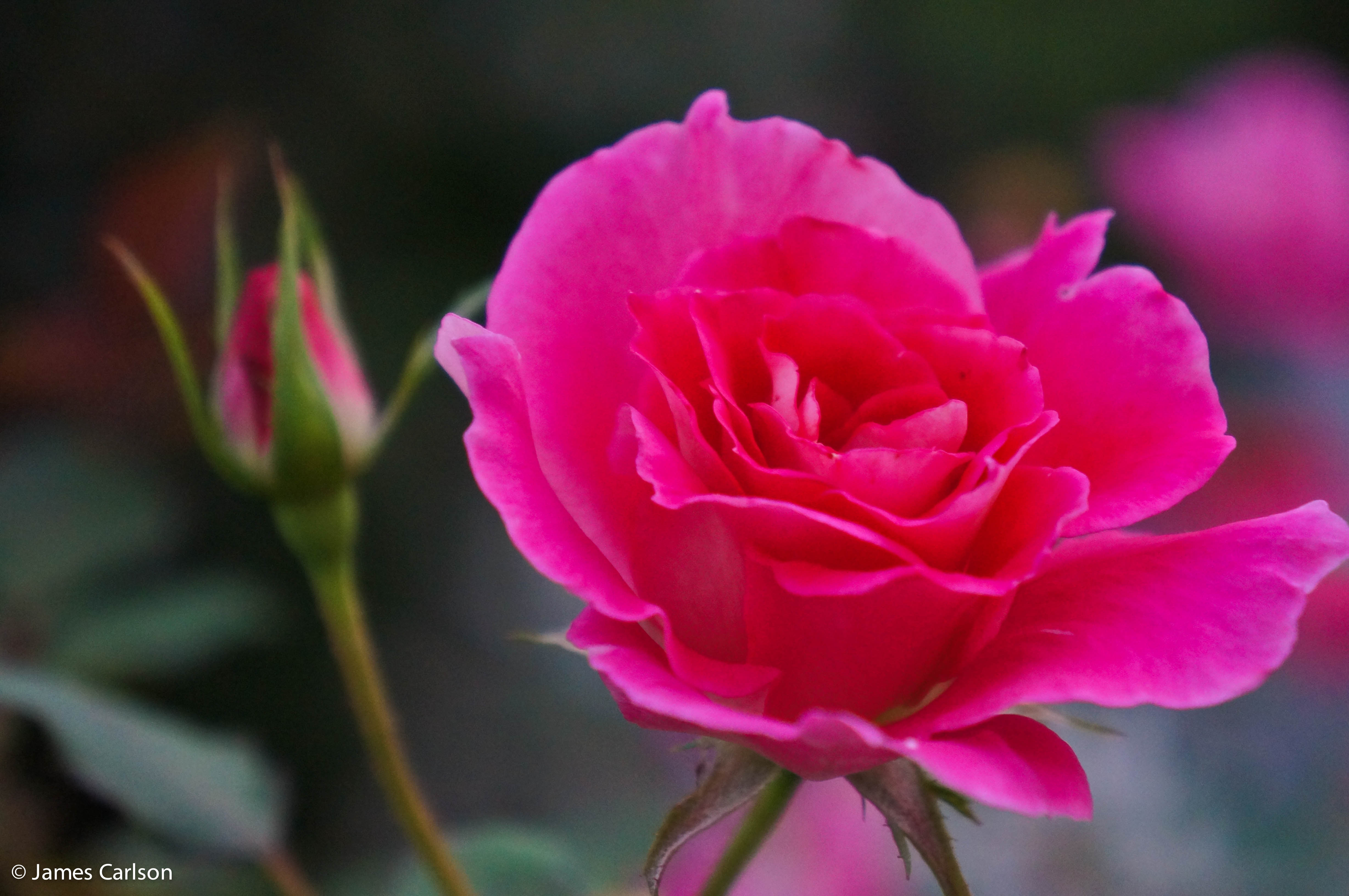
Rose
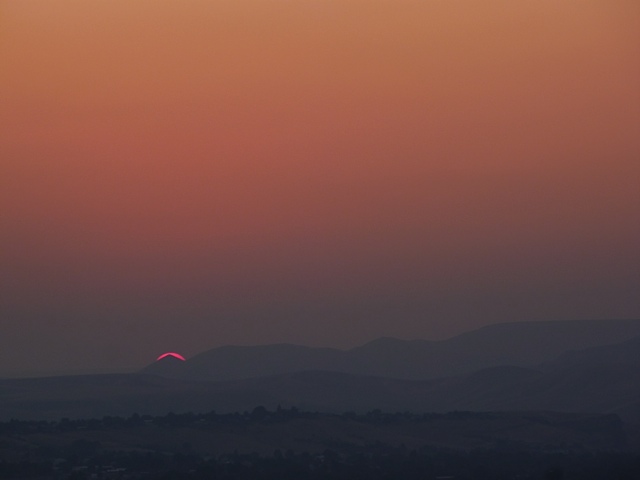
Looking west
Sunset in Lewiston, Idaho, September 11, 2011. My sister Sally took this photograph shortly before leaving town. She was there to close up our father’s house, which has now been sold. Here is Sally’s message to me:
dad always liked to watch the sun going down into the notch, which would be around his birthday. its a little south of the notch.
That day the beauty of the sunset was intensified by the smoke of forest and grass fires.
Check out gapminder.org, a wonderful statistics visualization site. For example, there is this: CO2 emissions since 1820
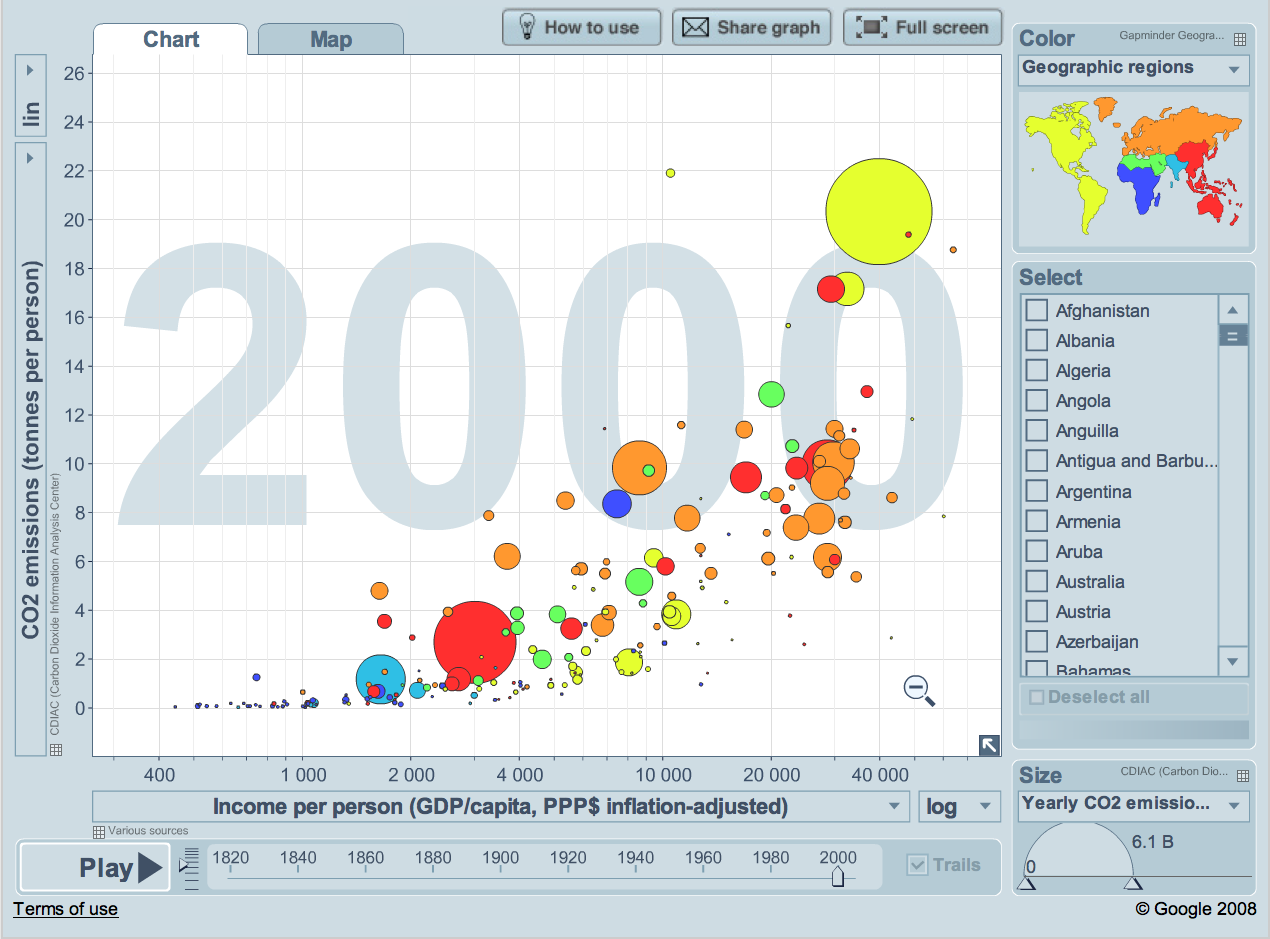
CO2 emissions in 2000 by country
If you go to the link above, you can animate this image, seeing how the per country CO2 changes over the period 1820-2000. The area of the circle is proportional to the country’s annual CO2 emission per capita. Mouse over circle to see name of country. Gapminder.org has a wealth of great databases and visualizations thereof.
Note. I am so impressed with Gapminder.org — their mission and their effectiveness — that I would like draw your attention to this quote:
Building a fact-based world view
Gapminder is a non-profit foundation based in Stockholm. Our goal is to replace devastating myths with a fact-based world view. Our method is to make data easy to understand. We are dedicated to innovate and spread new methods to make global development understandable, free of charge, without advertising. We want to let teachers, journalists and everyone else continue to freely use our tools, videos and presentations.
Your contribution will help us in our efforts to explain how the world is changing. Your generosity will strengthen our independence.
Help us achieve a fact-based understanding of the world. Support our work by making a donation today.

Essence, 473 ml

The Visit
Download, print and let your children or class color this pen-and-ink drawing. Of course you can color a printout too:-) One of these days I will have a full coloring book to offer.
Note: click on image to get large version before downloading

 Circle and Square