Circle and Square

Art, Code, Music, Mathematics

  • About
  • Art:31416kungfu
  • Curated Links
  • Jabberwocky
  • Music
  • OffCenter Apps

Installation in Red by Qureshi

Posted by epsilon on May 17, 2013
Posted in: Art. Tagged: blood, Faiz Ahmed Faiz, Imran Qureshi, urdu poetry, violence. Leave a comment
Chang W. Lee/New York Times

Chang W. Lee/New York Times

And How Many Rains Must Fall Before the Stains Are Washed Clean?

This line in the famous poem by the Urdu poet Faiz Ahmed Faiz (1911-1984) is a verbal counterpart to the installation at the Metropolitan Museum of Art by Pakistani artist Imran Qureshi. See the New York Times article, May 16, 2013 by Ken Johnson.

Qureshi writes: “These forms stem from the effects of violence. They are mingled with the color of blood, but, at the same time, this is where a dialogue with life, with new beginnings and fresh hope starts.”

The exhibit runs from May 14 through November 3, 2013. Mr. Qureshi, who a created similar installation for the 2011 Shariah Biennial in the United Arab Emirates, is also know for his paintings in the style of 16-th and 17-th century Indian miniatures.

CLIPPINGS

(1) On war, from december71.wordpress.com

Perhaps, faiz has summed it up better than any other:

kab nazar meiN aaye gi be daaGh sabze ki bahaar
khoon ke dhabe dhuleiN ge kitni barsaatoN ke baad

When will we again see a spring of unstained green?
After how many monsoons will the blood be washed
from the branches?

Faiz Ahmed Faiz: On return from Dhaka: Hum Ke Thehray Ajnabi

(2) SIX URDU POEMS

Film: Meherjaan: A Story of War and Love

(3) Gunshots on Warm Spring Evenings

(4) In the world of print, it falls within the bounds of copyright law to quote small bits of text. Above, I have made a visual quote of Chang W. Lee’s powerful photograph. I hope that this will be viewed both as acceptable practice and become common one, helping to disseminate good images more widely in the same way that good text is disseminated.

Zero

Posted by epsilon on May 16, 2013
Posted in: Mathematics. Tagged: cambodia, Casselman, Mathematics, oldest zero, zero. 1 Comment

WORLD’S OLDEST ZERO?

More about zero — Gwalior India (Bill Casselman)

zero-cambodia

Cool Raspberry Pi

Posted by epsilon on May 16, 2013
Posted in: Code, RPi-Arduino. Tagged: aerial balloon photography, deep water photography, internet radio, projects, raspberry pi, RPi-Arduino, time lapse photography. Leave a comment

An occasionally updated collection of links to projects and resources for the Raspberry Pi.

Projects

  1. Internet radio – photo below
  2. Time-lapse photography • Bird photography • Water drop photography • Macro photography • Gigapixel photography • High-altitude baloon photography – (2), (3) • Deep Pi: Deep-water remote ocean-monitoring
  3. Temperature sensor: Tony Tosi • Cambridge University
  4. AirPi, an automatic air quality & weather monitoring device powered by a Raspberry Pi
  5. Bark-activated door-opener

Blogs

  • Raspberrypi.org – photography
  • openmicros.org • PiWake — the system used to wake the sleeping RPi in the Deep Pi ocean video project mentioned above
  • Dr. Monk
piRadio

piRadio

Some starter projects with GPIO

Mio — GPIO: one input (a switch), and one output (an LED).

Python

Posted by epsilon on May 14, 2013
Posted in: Code. Tagged: Code, humor, python, xkcd. Leave a comment
by XKCD

by XKCD

To improve your life/work balance, please go to XKCD.

PiRadio

Posted by epsilon on May 13, 2013
Posted in: Code, RPi-Arduino. Tagged: classical music, internet radio, internet radio stations, jazz, linux, npr, opera, piradio, raspberry pi, shell script. Leave a comment

INTERNET RADIO ON THE RASPBERRY PI

Below is a photo of my Raspberry Pi, playing Miles Davis & More – I’m Oldfashioned at 2 am. The installation procedure for “PiRadio” is given below the photo, along with a short list of internet radio stations. I’ve also given directions on how to find the URL, aka web address, of stations you would like to listen to. This was the hardest part:-) At the end, I’ve given (i) a short list of commands for the player program, mpc, (ii) a shell script, ir, internet radio, for playing stations by name, e.g., play jazz. It does other thins as well, e.g., maintaining a list of songs that you have “liked.”

Credit: I learned how to make a PiRadio from Avogadro’s number.
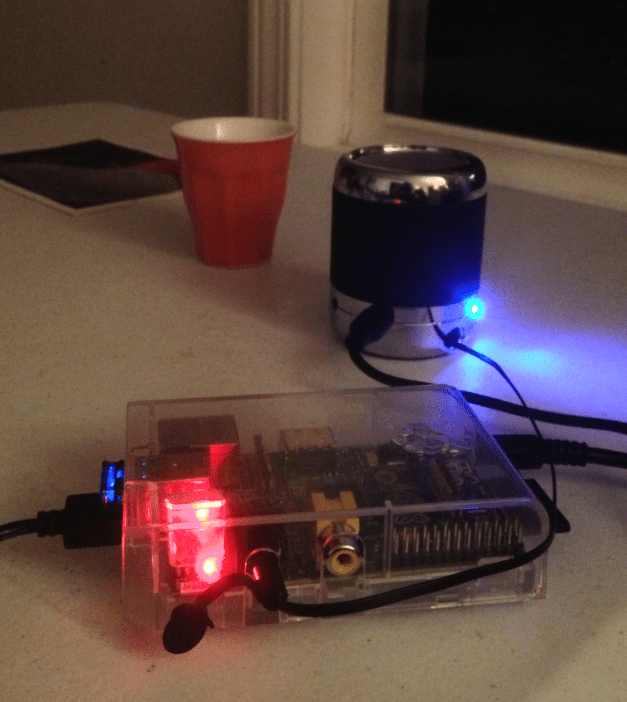
piRadio

piRadio @ 2AM

1. Update the Raspberry Pi System:

   sudo apt-get update
   sudo apt-get upgrade

2. Install mpc & mpd:

   sudo apt-get install mpc mpd

3. Add stations:

   mpc add http://69.166.45.47:8000              # NPR News
   mpc add http://174.37.16.73:8158/Cosmitto     # Jazz

4. Have fun:

   mpc play 2      # play some jazz
   mpc current     # list current song
   mpc play 1      # listen to NPR
   mpc playlist    # see what's playing
   mpc stop        # time to go to work

NOTES

(1) FINDING INTERNET RADIO STATIONS

The hardest part was finding correct URL’s for the radio stations. Here is one method. (a) Go to shoutcast.com. Find your station there. I found this station listed in blue:

Concerto & Chamber Music etc. (KOREA) Recently played: Borodin – String Quartet No.2 in D major – II.

You need to download the file linked to this and edit it with a text editor. On the mac, control click on the blue title. The file will be downloaded to your Downloads folder. You will find it as the most recently added file with name like tunein-station.pls. Open the file in a text editor. You get something like this:

   
   numberofentries=1
   File1=http://121.135.98.32:8000
   Title1=(#1 - 15/50) Concerto & Chamber Music etc. (KOREA)
   Length1=-1
   Version=2

The title was the last piece/song played. What you want is this: http://121.135.98.32:8000
Add this station with the command

   mpc add http://121.135.98.32:8000

(2) SOME INTERNET RADIO STATIONS

   1    NPR news             http://69.166.45.47:8000
   2    Jazz                 http://174.37.16.73:8158/Cosmitto
   3    Chamber music        http://121.135.98.32:8000
   4    Baroque              http://85.25.100.57:8010
   5    Classical            http://174.36.206.197:8000
   6    Piano Trio           http://72.26.204.28:6874
   7    Opera                http://82.197.167.139:80

(3) SOME USEFUL COMMANDS

  play N             - play song/station N
  stop               - stop playing
  add URL   	     - add stream at URL
  clear              - clear playlist
  crop	             - remove all songs/stations except for 
                       the one currently playing
  current            - show the currently playing song
  del N	             - removes playlist item N
  move A B           - moves item at position A to 
                       position B in the playlist
  next               - starts playing next song/station on playlist.
  prev               - start playing previous song/station on playlist
  playlist    	     - display playlist

See man mpc for the complete list.

(4) A SHELL SCRIPT

The shell script ir, aka internet radio can play stations by name, list the streams you have added to your playlist, maintain a list of songs you have “liked”, and more. Examples:

– ir jazz – play my jazz station
– ir list – list what is currently playing on all stations
– ir now – see what is playing now:
– ir stations – list stations
– ir stream – list the streams of the stations

– off – turn radio off
– volume L – set volume to L, e.g., ir volume 85 to set volume to 85%
– like – log currently playing song to ~/likes.txt

Abbreviations: type ir to see these, e.g., ir n for ir now.

You will need to edit the file below so that the first set of commands, “ir jazz”, etc, conform to your playlist.

#!/bin/bash

# ir: play internet radio station, e.g. "ir npr"

case $1 in
  [0-9]*) mpc play $1
      ;;
  npr) mpc play 1
       ;;
  ja*) echo; echo "  Jazz"; echo
       mpc play 2
       ;;
  ve*) echo echo "  Venice"; echo
       mpc play 5
       ;;
   ba*) echo; echo "  Baroque"; echo;
       mpc play 4
       ;;
   tr*) echo; echo "Piano Trio"; echo;
       mpc play 6
       ;;
   ch*) echo; echo "  Chamber Music"; echo;
       mpc play 3
       ;; 
   p*) # playing
       echo
       mpc playlist -f "  %position% %name% -- %title%" | sed 's/$/\n/'
      ;;
   str*) # streams
     mpc -f "  %position% %name% -- %file%" playlist
     ;;
   sta*)
    mpc -f "%name%" playlist | awk '{printf "  %-3s %s %s %s\n", NR, $1, $2, $3 }'
     ;;
   o*) # off
      mpc stop
      ;;
   l*) # like
      # log info on currently playing song that I like
      echo ""
      mpc current | sed 's/^/  /'
      echo 
      echo "  -- LIKED"
      echo
      mpc current >> ~/likes.txt
      echo "" >> ~/likes.txt
      ;;
    -l*) # likes
      less ~/likes.txt
      ;;
    n*) # now
      mpc current
      ;;
    v*) # volume
     mpc volume $2
     ;;
   *)
       echo
       echo "Stations: baroque, chamber, jazz, npr, trio, venice"
       echo "Commands: like, -likes, now, off, volume"
       echo "Lists: playing, stations, streams"
       echo
       echo "The volume command takes an extra argument, as in 'ir volume 100'."
       echo "The command 'ir like' logs the currently playing song to ~/likes.txt."
       echo "The ecommand 'ir likes' display the file of songs you like."
       echo
       echo "Abbreviations: generaly the first letter or first few letters, e.g.,"
       echo "l = like, -l = -likes, n = now, o = off"
       echo "p = playing, sta = stations, str = streams, v = volume"
       echo "Not every command has an abbreviation"
       echo
       ;;
esac


PiFace – the basics

Posted by epsilon on May 12, 2013
Posted in: Code, RPi-Arduino. Tagged: GPIO, physical computing, PiFace, python, raspberry pi, RPi-Arduino, technology. 1 Comment

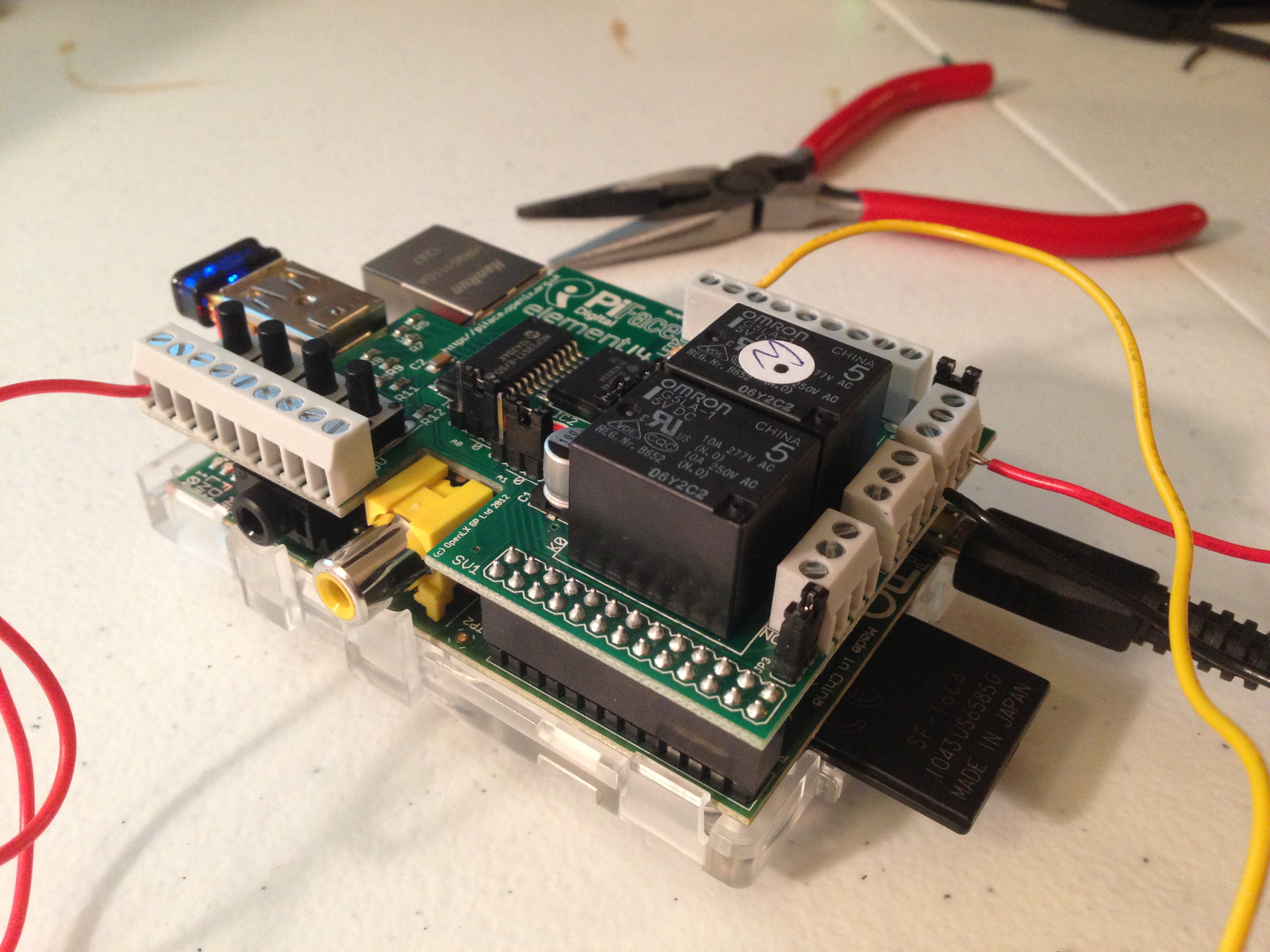
PiFace is an IO board for the Raspberry Pi computer — 8 buffered inputs, 8 outputs, and two relays that theoretically can handle 10 amperes at 230 volts. See Gordon’s Projects for a full review. The model allows you to disconnect the relays from two of the outputs, and there is a Python interface. To test the board (and my understanding of it), I rigged up a simple circuit with one external switch — a Morse code type key — one, LED, and one resistor. Below are photos of (i) the PiFace board riding on top of the Raspberry Pi, (ii) the circuit board (iii) the whole kit-and-kaboodle, (iv) the circuit.

The code for running the circuit is at gitHub. (i) Use on(7) and off(7) to turn the LED on an off manually; 7 is the pin the LED is wired to; (ii) use blink(7) for a more exciting test; (iii) use read(0) to read the switch, which is attached to pin 0; (iv) use control(7,0) to control LED on pin 7 by the switch on pin 0 — flip the switch attached to pin 0 and ground to turn on the LED on pin 7. Of course all this is ridiculous overkill, but the idea is to get started and to test the PiFace + Raspberry Pi combo.

Note added: Stephen Visser has an excellent article on the PiFace.

PiFace

PiFace sitting on top of Raspberry Pi

Breadboard circuit

Breadboard circuit

Kit and Kaboodle

Kit and Kaboodle

Schematic

Schematic

Mochizuki and the ABC Conjecture

Posted by epsilon on May 10, 2013
Posted in: Mathematics. Tagged: ABC conjecture, Andrew Wiles, carolyn chen, conjecture, Fermat's last theorem, japanese mathematician, Mathematics, Mochizuki, number theory, proof. Leave a comment

Article on Mochizuki’s work.

THE PARADOX OF PROOF
by Carolyn Chen

On August 31, 2012, Japanese mathematician Shinichi Mochizuki posted four papers on the Internet.

The titles were inscrutable. The volume was daunting: 512 pages in total. The claim was audacious: he said he had proved the ABC Conjecture, a famed, beguilingly simple number theory problem that had stumped mathematicians for decades.

Then Mochizuki walked away. He did not send his work to the Annals of Mathematics. Nor did he leave a message on any of the online forums frequented by mathematicians around the world. He just posted the papers, and waited.

…

Seoul by night #7

Posted by epsilon on May 9, 2013
Posted in: Photography, Travel. Tagged: cafe, korea, night, photography, Seoul. Leave a comment

korea-02774

Seoul by night #6

Posted by epsilon on May 9, 2013
Posted in: Photography, Travel. Tagged: cafe, korea, night, photography, reflection, Seoul. Leave a comment

korea-02779

Seoul by night #5: my office

Posted by epsilon on May 9, 2013
Posted in: Photography, Travel. Tagged: cafe, korea, Seoul. Leave a comment

korea-02770

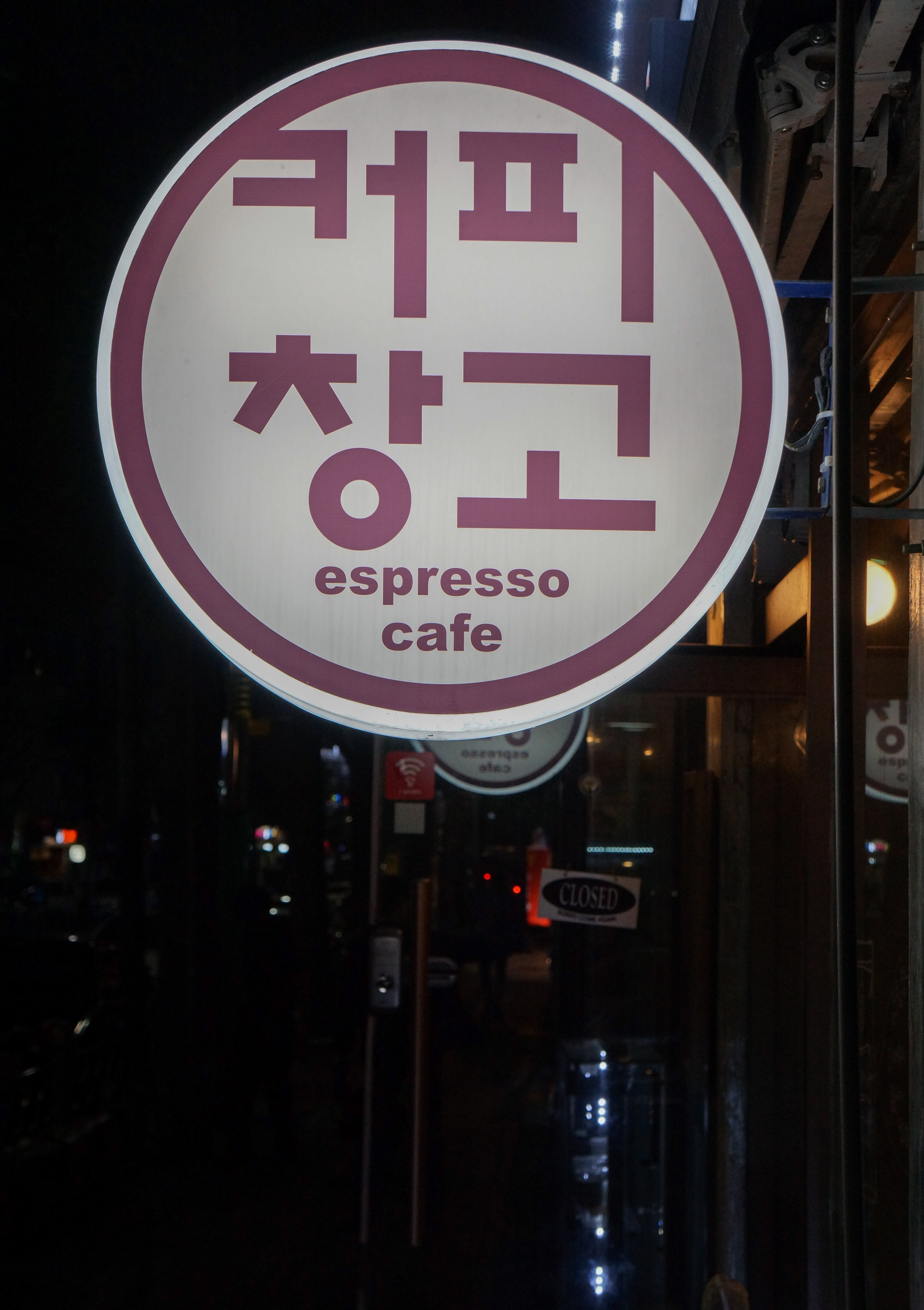
My office in Seoul, Korea, near KIAS (Korean Institute for Advanced Study).

Posts navigation

← Older Entries
Newer Entries →
  • Categories

  • Recent Posts

    • Generative Art
    • BonsaiBot
    • New York City
    • Geometry in New York City
    • Nonsense words in Swift
  • Top Posts

    • Werner Herzog on Imagery
    • Fractal cross
    • Arduino capacitative proximity sensor
  • Pages

    • About
    • Art:31416kungfu
    • Curated Links
    • Jabberwocky
    • Music
    • OffCenter Apps
  • Archives

  • January 2026
    M T W T F S S
     1234
    567891011
    12131415161718
    19202122232425
    262728293031  
    « Feb    
  • Category Cloud

    31416kungfu Art Code Film Mathematics Music NYC Photography Politics RPi-Arduino Science Travel Uncategorized Words
Blog at WordPress.com.
Circle and Square
Blog at WordPress.com.
  • Subscribe Subscribed
    • Circle and Square
    • Join 143 other subscribers
    • Already have a WordPress.com account? Log in now.
    • Circle and Square
    • Subscribe Subscribed
    • Sign up
    • Log in
    • Report this content
    • View site in Reader
    • Manage subscriptions
    • Collapse this bar
 

Loading Comments...